

About the Service
Release Tension. Reconnect With Your Body.
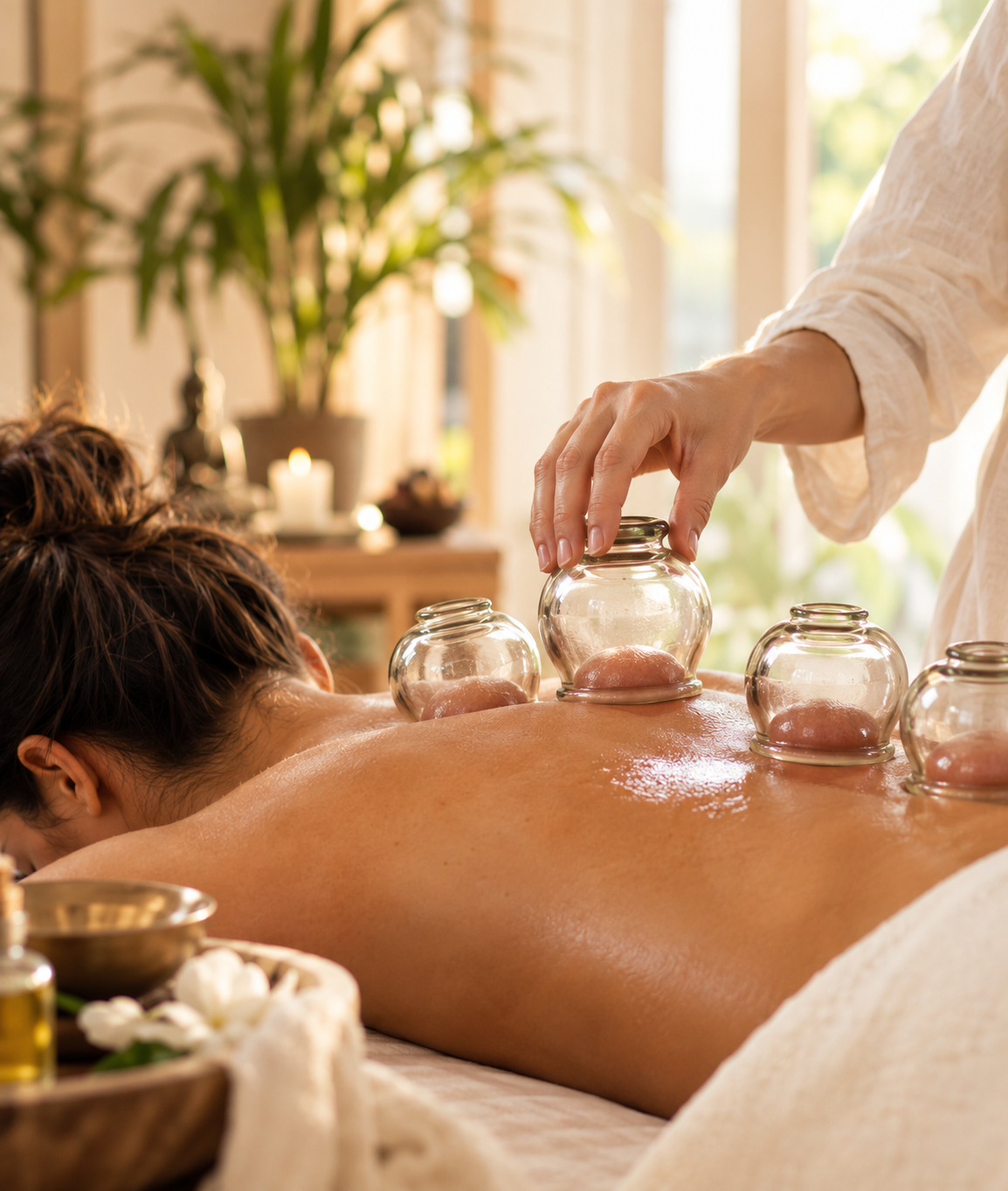
Discover dry cupping therapy at Zenmaya, a traditional complementary bodywork practice that uses specially designed cups to create gentle suction on the skin.
Unlike wet cupping, dry cupping does not involve cutting the skin or drawing blood. The suction lifts the skin and underlying superficial tissue, creating a distinctive sensation that can be incorporated into a personalised wellness session.
At Zenmaya, dry cupping is offered as part of a holistic approach to relaxation, body awareness and physical wellbeing. Depending on your individual needs and suitability, cups may be applied to selected areas of the body, such as the back and shoulders, by a trained practitioner.
What Can Dry Cupping Offer?
Relaxation: Enjoy dedicated time to pause and unwind as part of your wellness routine.
Muscular Comfort: Some people find cupping helpful for temporarily easing everyday muscular tension and discomfort.
A Personalised Experience: The areas treated, suction intensity and duration can be adapted to your comfort and individual circumstances.
Body Awareness: Take time to reconnect with physical sensations and give attention to areas that feel tense or overworked.
Experiences vary from person to person, and dry cupping is not a guaranteed treatment for pain or other medical conditions.
What to Expect During Your Session
Your session begins with a discussion of your goals, relevant health considerations and any areas of concern. Your practitioner will explain the procedure, check your suitability and agree on the approach with you before beginning.
Cups are placed on selected areas of the skin to create suction. Depending on the technique used, they may remain in place for a short period or be moved gently across the skin. You may feel pulling or tightness, but the treatment should remain within your agreed comfort level.
After the cups are removed, your practitioner can discuss simple aftercare and what you may notice in the hours or days following your session.
Is Dry Cupping Right for You?
Dry cupping may appeal to people seeking a complementary bodywork experience as part of their wider wellness routine. However, it is not suitable for everyone. It may need to be avoided or modified for people with certain skin conditions, bleeding disorders, a history of blood clots, reduced skin sensation or other relevant health concerns. Your practitioner should screen for these factors before treatment.
Book Your Dry Cupping Session
Make time for your wellbeing with dry cupping therapy at Zenmaya. Contact us to discuss your needs, check suitability and find a session that works for you.
Duration : 45-60 Minutes
Dry cupping is a complementary wellness practice and does not replace medical assessment, diagnosis or treatment. Temporary circular marks, tenderness or bruising may occur. Seek advice from a qualified healthcare professional for persistent, severe or unexplained pain.
Frequently Asked Questions
What are the benefits of dry cupping?
Some people report temporary relief from everyday muscular tension and discomfort, as well as relaxation. Research varies, and evidence is not strong enough to claim that cupping treats or cures medical conditions.
Does dry cupping hurt?
You may feel pulling, pressure or tightness where the cups are placed. The experience varies, but suction should be adjusted to your comfort. Tell your practitioner immediately if you experience sharp pain, burning, numbness or significant discomfort.
Will dry cupping leave marks?
It can. Circular red, purple or darker marks may appear after treatment and can last several days, sometimes longer. Their colour does not reliably indicate toxins, the severity of a problem or the treatment’s effectiveness.
How often should I have dry cupping?
There is no single schedule suitable for everyone. Frequency depends on your skin’s response, comfort, health considerations and practitioner guidance. Allow any marks or irritation to resolve before considering another session in the same area.
Who should avoid dry cupping?
Cupping may be unsuitable for people with bleeding disorders, certain skin conditions, a history of blood clots, reduced skin sensation or other health concerns. It should not be applied over wounds, infected skin or other contraindicated areas. Discuss pregnancy, medication and relevant medical conditions with your practitioner before booking.
Is dry cupping the same as Hijama (Wet Cupping)?
Not exactly. Hijama commonly refers to wet cupping in many traditional practices, where the skin is punctured and blood is removed. Dry cupping uses suction without cutting the skin. Terminology can vary between traditions.

